// Key takeaways
- How to Book Tickets on China High-Speed Rail
- WeChat Pay/AliPay vs Cash & Credit Cards
- Using your Mobile Phone
- Taking Ferries Between Shenzhen, Hong Kong and Zhuhai/Macau
In addition to my life as a systems engineer, I also have an ecommerce business – so, for such, I had the opportunity to head to China again this year for the Canton Fair, and then took a trip around the southeastern coast of China visiting a number of suppliers and factories. While in Guangzhou for the Canton Fair, I was with a marvelous group of people, but a 4-day multi-city section of the trip I just did solo. I wanted to share the details of this in the case it helps any of you out there who are planning a trip around China, as it’s remarkably easy to get around even for a non-Mandarin speaker like myself, once you know the setup.
I’ve got some good videos & such of the trip itself, but before I get into that I wanted to give you a few travel tips in case you’re looking at traveling around China.
How to Book Tickets on China High-Speed Rail
China now has more high-speed rail than the rest of the planet combined. It’s an amazing network, and unless you’re going greater than halfway across China, it’s almost always going to be more practical to go by train than to fly. Also, it’s much simpler and VASTLY cheaper to buy train tickets with low notice than to fly. For example, the ~600mi trip from Guangzhou to Fuzhou, booked only a few days in advance, would have been hundreds of dollars, but was only ~$60USD by train.
In terms of things to know:
-
Don’t try to buy your train tickets at the station: I made the mistake once of trying to get my train tickets at the station. This is impractical for a few reasons. First, trains fill up fast, so you don’t want to get there and realize the trains are full for the rest of the day. Next, automated train ticket kiosks are only in Chinese, and you have to have a valid Chinese ID card to use them. ALSO they only accept payment with WeChat Pay, AliPay or UnionPay, and not credit card. So, unless you’re a Chinese citizen, you’ll be out of luck. You CAN get local train tickets at the ticket booths, but lines are often EXTREMELY long, the ticket agents only speak Mandarin/Cantonese, and you can only pay in RMB (yuan). So, BOOK AHEAD OF TIME.Note again – if you go to buy Chinese train tickets at a train station, you MUST BRING CASH in RMB. US Dollars or HK dollars will not be accepted, and they do NOT have currency exchanges at the stations.
-
How to book train tickets online: The best way is to use CTRIP, which was recently rebranded to “trip.com”. What to do is:
- Sign up for an account on trip.com.
- Find the trains you want to take & book them using your passport number. Ctrip DOES accept Visa/Mastercard/American Express, thankfully, and is basically the only way you’re going to be able to buy Chinese train tickets with a credit card.
- They will email you a confirmation number which you should print & keep on you.
- Go to the station early (make sure to leave at least an hour of slop time before your train leaves) and go to the “Ticketing” area (usually a separate entrance to the station, outside of the normal waiting area) and pick up your tickets with your passport.
- ALWAYS CARRY YOUR PASSPORT – you’ll need it 4-5 times as part of this process
-
Booking Connecting Trains: One thing to note is that trip.com currently won’t book connecting trains for you. For example, getting from Guangzhou to Fuzhou means changing trains in Shenzhen. But as a foreigner, you wouldn’t know that. So, it’s helpful to have an understanding of the rail routes in China so that you can book tickets accordingly, and book the legs of your trip separately.This is the map of Chinese High Speed Rail as it stood in 2016, though they’re literally adding to it every day.
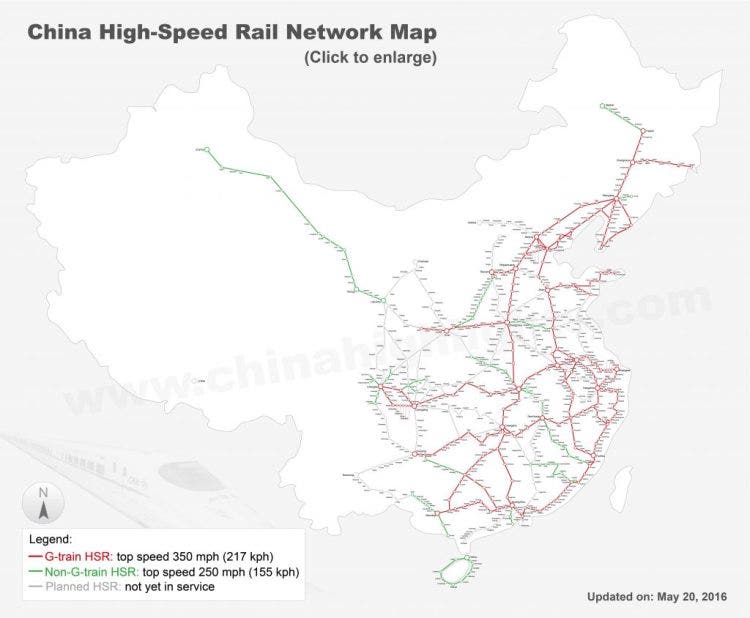
Chinese CRH High Speed Rail routes as of 2016
-
Finding & Boarding Your Train: When you get to the train station, you’ll notice that virtually nothing is in English, and it’s a crowded, frenetic zoo. EVERYONE goes by train out there. But the stable piece of information you have is your TRAIN NUMBER. It will have a letter followed by 3-4 digits, like G8767. This page on ctrip gives a great overview of the Chinese train types, the difference between G trains and C trains, etc which you SHOULD know.Once you have your ticket and get through the brief security checkpoint they always have, find the departure board. As soon as your train number is at the top of the screen, that means it’s ready for you to queue up and get ready to board.
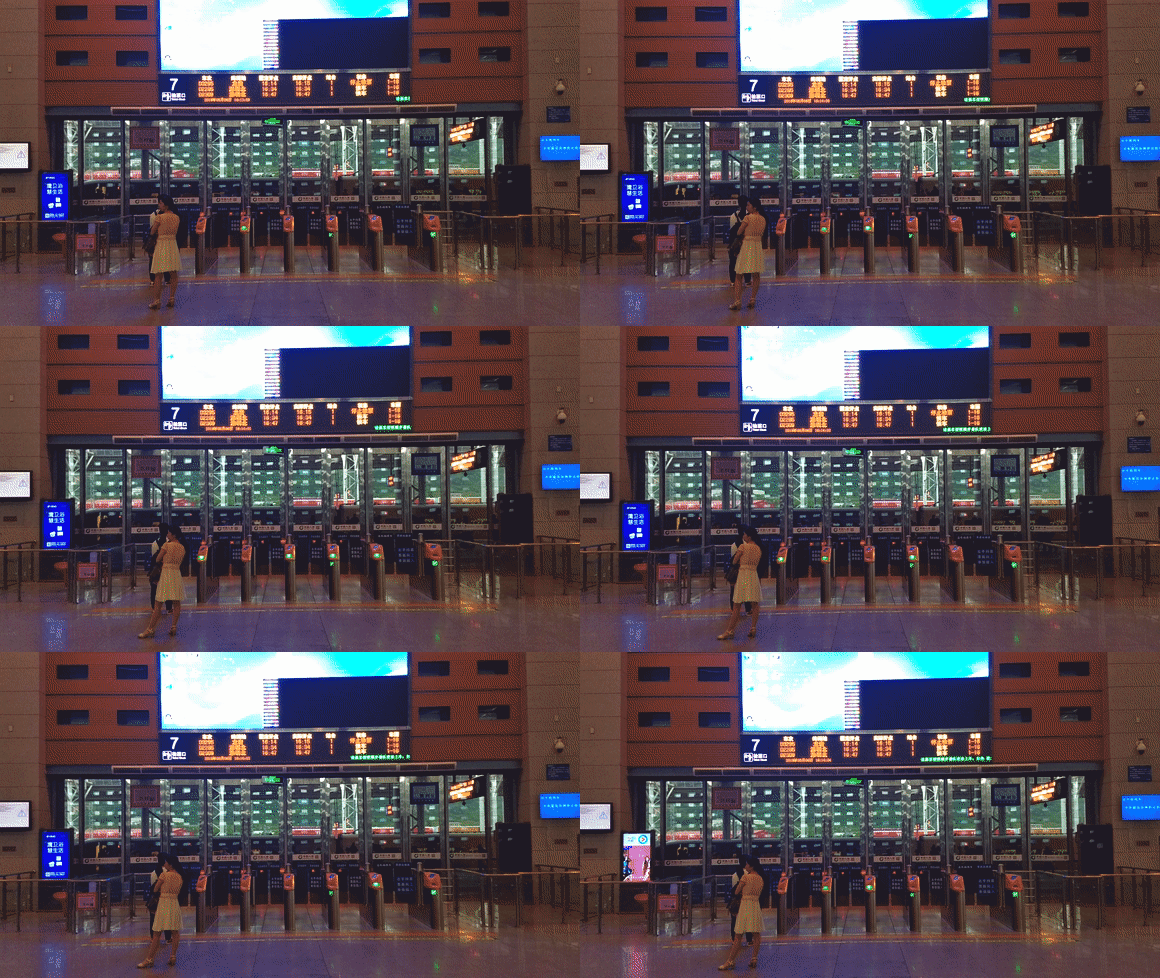
Departure Board at Quanzhou Railway Station, Fujian, China
You then go through the ticket turnstyle and REMEMBER TO TAKE YOUR TICKET WITH YOU. You will need that ticket when you get off the train. (people commonly try to take the train further than their ticket allows, so when you reach your destination, you scan your ticket again to validate you actually were allowed to go that far)
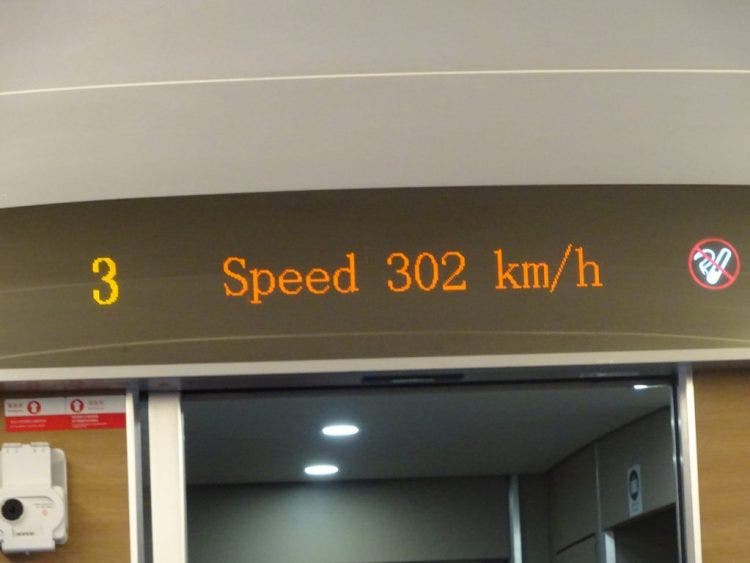
Speed indicator on my CRH380 train from Guanzhou – Shenzhen
Once you’re underway, it becomes pretty crystal-clear why it is that train travel is so heavily favored there. The trains are comfortable, smooth and EXTREMELY FAST. For example, the 85-mile trip from Guangzhou to Shenzhen takes only 30 minutes. 30 MINUTES! That’s faster than the light-rail train takes to get me the 8 miles from my house to downtown Portland, Oregon. It’s a system I think every government official in the USA needs to experience to get an idea of what USA transit infrastructure COULD be.
Please let me know though if you have any questions about the process, and I’d be happy to answer them for you.
WeChat Pay/AliPay vs Cash & Credit Cards
In much of China these days, mobile payments are the preferred payment method for even stopping for a drink at the corner store. However, if you’re not a Chinese citizen or don’t have a Chinese bank account, you’re not going to be able to use AliPay or WeChat Pay. Also, it’s important to note that hotels are about the only places that accept credit cards, so while you’re traveling make sure to have enough Chinese RMB on you to cover your needs, and keep it in a storage pouch tight on your person.
As noted above, the only way to buy train tickets with a credit card is online, so for the most part, you will need to use cash for your every day transactions. Or, make friends with locals who can pay for things for you with WeChat or AliPay.
Using your Mobile Phone
Mobile service in China is extremely good these days, to the point where there are even cellular repeaters for cell service in the tunnels and stations of the Shenzhen and Guangzhou Metro. There are a few ways you can go about getting mobile service while traveling in China, depending on your needs:
- AT&T: As I’m on AT&T, I just used their $10/day international plan, which basically just makes your normal AT&T data plan translate to Chinese roaming networks. So, I was able to do video calls, and even (for the most part) use Google/Gmaps/Facebook/Twitter/etc and other items normally blocked by Chinese filters while I was on the go. Downside is, well, it’s $10/day which adds up over a longer trip.
- Buy a Chinese SIM card: It’s also dead-easy to go to one of the local China Telecom or China Unicom stores and buy a local SIM card for your trip. I did this on my first Chinese trip, and it was only the equivalent of about $15 for a SIM card that lasted me well for data & calls throughout the trip. Downside is that I have a lot of websites that I’ve got 2-factor auth that ties to my phone, and with a different SIM in, I can’t get text messages. Easy solution is to get a local chinese “burner” phone that you can use during your trip, which also lowers your risk if it gets lost or compromised.
Taking Ferries Between Shenzhen, Hong Kong and Zhuhai/Macau
Yet another mode of transportation that I wanted to make mention of is the high-speed ferry system between Shenzhen, Hong Kong, Zhuhai and Macau.
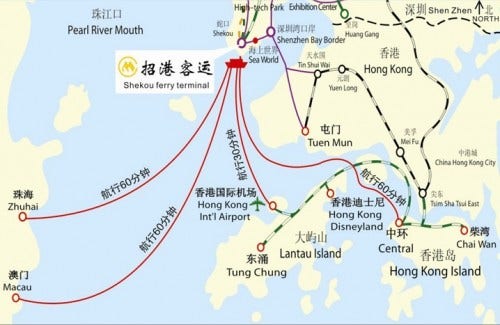
Ferries between Shekou, Shenzhen, Hong Kong, Macau, and Zhuhai
There is a network of high-speed ferries which runs between Hong Kong and Macau, Zhuhai (mainland China), Shekou Port in Shenzhen (China), Hong Kong Airport, and Shenzhen Bao’an Airport. The Shenzhen Shekou ferry terminal is a short cab ride (or in my case, a 1-mi walk) from the next-to-last stop on the Shenzhen Metro Orange Line (Line 2).
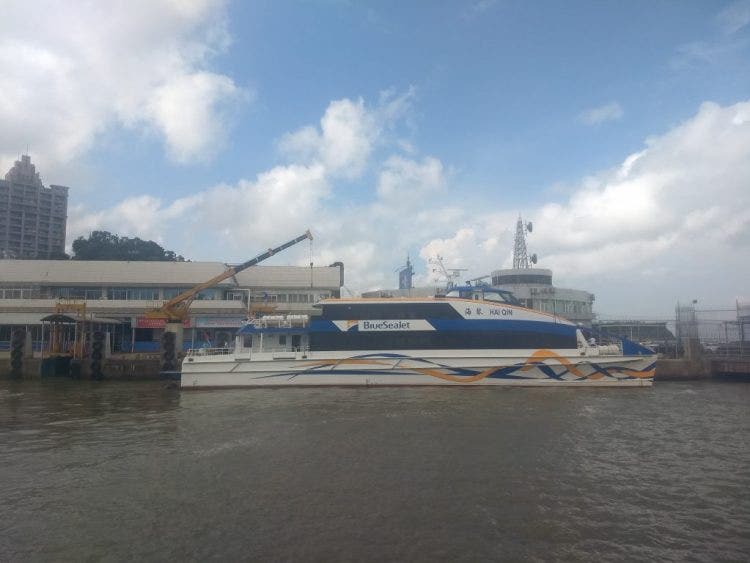
One of the Ferries that makes the Shenzhen Shekou -> Zhuhai run
The ferries all run at about 35-40mph, so they can make the trip from Shekou Port in Shenzhen to Zhuhai in about 35 minutes. They have built-in customs and immigration as well, so you take ferries directly from Zhuhai in China to the Hong Kong Airport (curiously not a line mentioned on the map) and the ferry terminal will actually check you directly in to your flight at Hong Kong Airport, as well as do direct flight transfers between HKG Airport and Shenzhen Bao’an (SZX) airport. The ferries are comfortable, fast and not crowded and I’d highly recommend them if you’re going from Hong Kong to Macau, or to Zhuhai.
// Related reading
-
Field Experiment · LLM
Testing GEO/SEO with Adobe LLM Optimizer
Read the experiment →
-
Field Notes · DevOps
Tailing and viewing Adobe Cloud Manager build logs
Read the runbook →